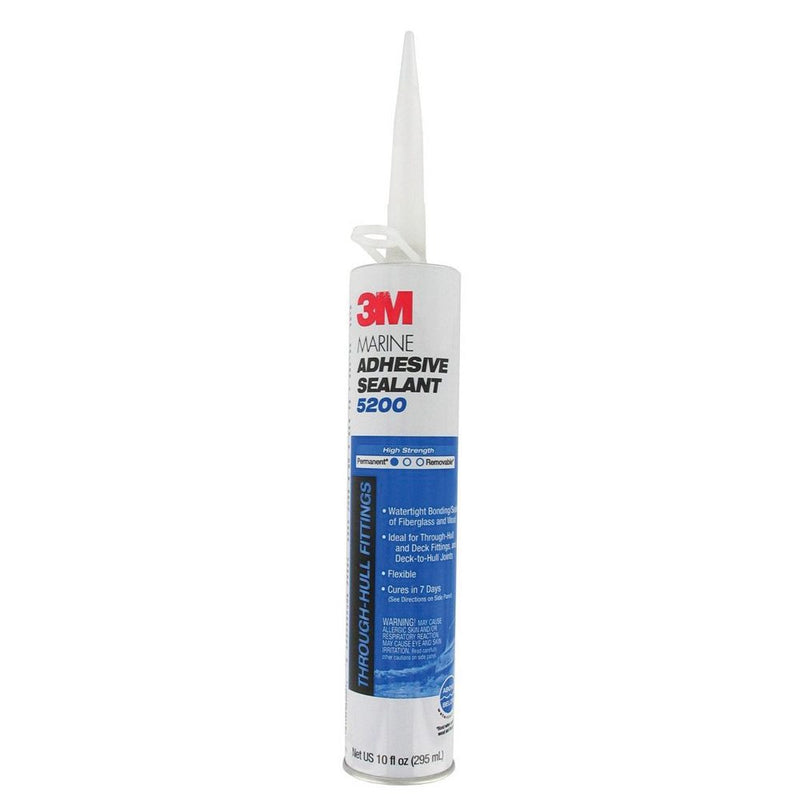
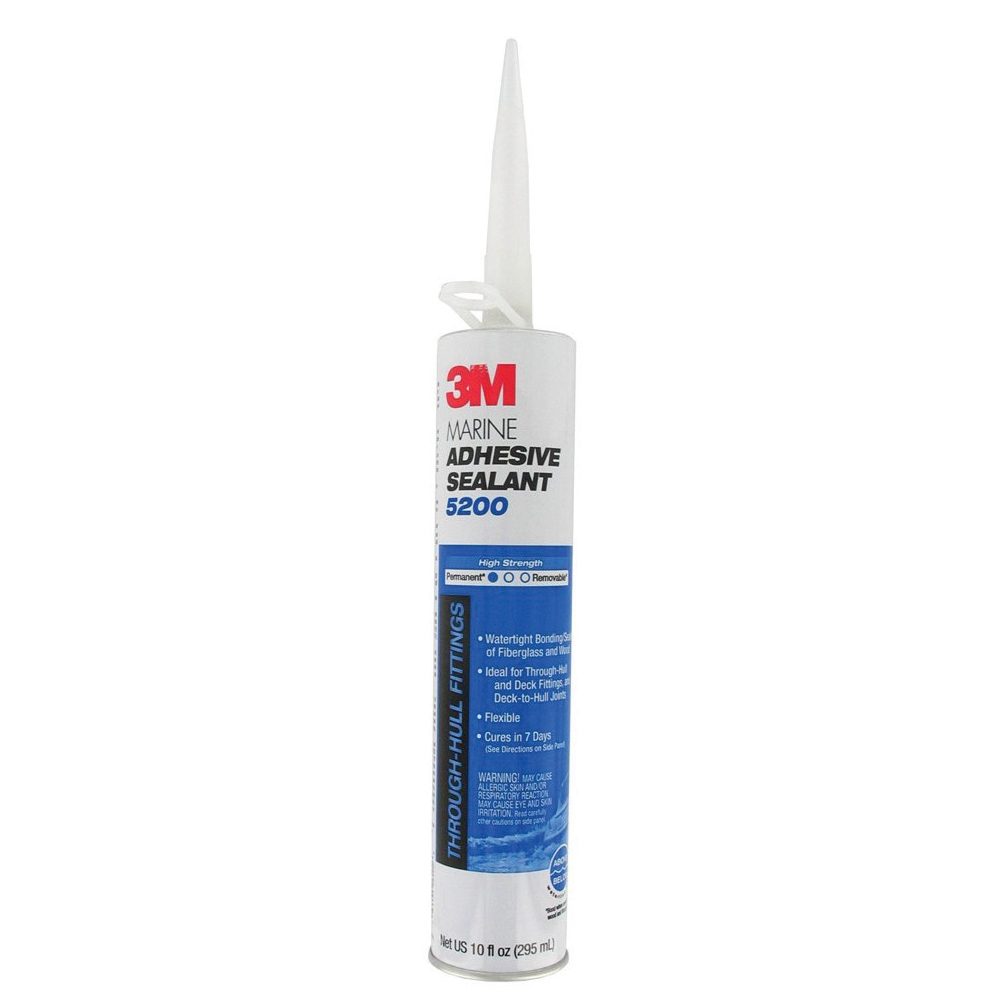
3M 5200 - Marine Adhesive Sealant
High-strength polyurethane marine sealant providing watertight, weather-resistant bonds above and below waterline with handling strength in 48 hours.
SKU:06520
Low stock
⚙ Ideal For
- Boat hull and deck sealing
- Marine hardware installation
- Fiberglass and gelcoat bonding
- Wood joint sealing
- Waterline and submerged joints
✔ Benefits
- Watertight sealed bonds
- Handles vibration and movement stress
- Excellent salt water resistance
- Strong adhesion to marine materials
- Flexible polyurethane formula
🚚 UK Shipping: Standard (£2.99) or FREE on orders over £75.
📦 Dispatched same-day if ordered before 3pm!
Couldn't load pickup availability
Shipping Information
What Are My Shipping Options?
In-Store Pickup
In-Store pickup is available on all purchase. Pickups are available Monday - Friday between the hours of 9:00–17:00.
An email confirmation will be sent when your order is ready for collection.
Free Shipping
We offer free Standard (2-3 Days) shipping on orders within the United Kingdom on orders over £100. Please note, some large items that require specialist courier companies, such as large mirrors and palleted items are excluded from this deal.
Shipping Fees
We also offer shipping at the following rates:
Standard-Size Parcel
Standard (UK Only) - 2-3 Days - £2.99
Express (UK Only) - 1-2 Days - £4.99
International (EU) - 3-7 Days - £14.99
International (ROW) - 5-10+ Days -£23.99
Large Parcel
Standard (UK Only) - 2-3 Days - £2.99
Express (UK Only) - 1-2 Days - £4.99
International (EU) - 3-7 Days - £14.99
International (ROW) - 5-10+ Days - £69.99
Most UK orders will be sent using Royal Mail, with larger items being sent with DPD.
International orders within the EU will normally be dispatched with Royal Mail, DPD, or UPS.
International orders to the rest of the world will normally be sent with DPD or UPS.
Please note, international delivery charges are very volatile and subject to change. We will do everything in our power to honour the delivery fee, however, in some cases, shipping may increase in price. In this event, you will be given the offer to pay the difference or cancel the order and receive a full refund.
Please note, we may be subject to various rules and restrictions in relation to some international deliveries, and you may be subject to additional taxes and duties over which we have no control. If such cases apply, you are responsible for complying with the laws applicable to the country where you live and will be responsible for any such additional costs or taxes.
Dispatch Times
Orders placed before 15:00 Monday - Friday will be shipped on the same day.
Orders placed after this time will be shipped on the following business day,
Please note, we are closed at weekends, as well as English Bank Holidays.
Returns Policy
Our refund policy can be found at the following address: https://esupplyline.com/policies/refund-policy.
Further Information
You can contact us for further information on our shipping policies using the following:
Phone: 01953 711 881
Email: sales@esupplyline.com
Live Chat: Available on our website, Monday - Friday, 8:30 - 17:00.
Contact Form: https://esupplyline.com/pages/contact
Share

3M 5200 - Marine Adhesive Sealant
3M 5200 Marine Adhesive Sealant is a high-performance polyurethane marine sealant engineered for watertight bonding in demanding marine environments where structural movement, vibration, and salt water exposure are constant challenges. The chemically-reactive polyurethane formulation hardens through moisture interaction, achieving handling strength in 48 hours and complete cure within 5–7 days. Flexible polymer structure retains bonding strength during thermal cycling, swelling, shrinking, and mechanical shock whilst maintaining excellent adhesion to wood, gelcoat, and fiberglass. Proven above and below waterline performance with outstanding weathering and salt water resistance makes 5200 the standard for marine sealing applications.
Key Features
- Polyurethane Moisture-Reactive Chemistry — Chemically reacts with moisture to create durable cross-linked polymer structure, distinguishing 5200 from non-reactive sealants.
- Very High Bonding Strength — Formulated specifically for strength-critical marine applications where adhesive failure represents serious safety and structural concerns.
- Flexible Polymer Formulation — Retains bonding flexibility despite high strength, accommodating structural movement and stress dissipation without bond failure.
- Waterline Versatility — Maintains performance above waterline (weather exposure) and below waterline (submerged conditions), eliminating need for different products for different boat sections.
- Rapid Handling Strength — Achieves handling strength in 48 hours, enabling workflow progression and secondary assembly within two days whilst allowing full strength development over 5-7 days.
Description
Marine Environment Challenges and Adhesive Requirements
Marine environments present extreme adhesive challenges—salt water corrosion, thermal cycling from water temperature changes, vibration from engines and wave action, swelling and shrinking of wooden hulls from moisture absorption, UV exposure to above-waterline surfaces, and constant movement from structural flexing. Traditional caulks and sealants fail in these conditions—non-flexible materials crack under movement; non-waterproof sealants absorb water and lose adhesion; corrosion-susceptible formulations fail in salt water. 5200's polyurethane chemistry addresses these challenges through formulation specifically validated in marine environments.
Polyurethane Moisture-Reactive Technology
5200's moisture-reactive polyurethane technology distinguishes it from conventional non-reactive marine sealants. Rather than simply hardening through solvent evaporation, 5200 chemically cross-links through reaction with environmental moisture. This chemical reaction creates a three-dimensional polymer network substantially stronger and more durable than evaporation-based sealants. Moisture-reactive chemistry is particularly advantageous in marine environments where water is always present—the sealant actually hardens more effectively in damp marine conditions than dry environments.
Watertight Sealing and Moisture Prevention
Boat hulls must be completely waterproof—any water ingress can compromise structural integrity or flood interior spaces. 5200 creates truly watertight seals—the cured polyurethane forms an impermeable barrier preventing water penetration. This watertight capability is validated through above and below waterline performance—5200 seals hull joints submerged in saltwater permanently, preventing osmotic blistering and water ingress damage.
Flexibility and Structural Movement Accommodation
Wooden and fiberglass boats flex and move structurally—hull swelling from moisture absorption, thermal expansion from temperature changes, movement from wave action and engine vibration. Rigid sealants would crack under this movement. 5200's flexible polyurethane retains elasticity after curing, absorbing structural movement without bond failure. This flexibility is validated through marine service—5200 seals remain intact despite decades of structural flexing that would destroy rigid sealants.
Vibration and Shock Stress Dissipation
Marine engines generate substantial vibration; wave action and impact create shock loads on hull structure. These dynamic stresses cause bond failure in rigid sealants—the stresses propagate through the brittle material until cracking occurs. 5200's flexible polymer dissipates vibration and shock stresses through elastic deformation, preventing stress concentration and bond failure. This vibration tolerance extends sealant life and maintains watertight integrity through years of marine service.
Salt Water and Weathering Resistance
Salt water presents extreme corrosion challenges—chloride ions attack traditional sealants and underlying substrates. 5200's polyurethane formulation is inherently resistant to salt water corrosion, maintaining bonding strength in submerged conditions indefinitely. Above-waterline surfaces experience UV degradation, ozone exposure, and thermal extremes. 5200's weathering resistance prevents UV-induced breakdown and maintains flexibility despite decades of sun exposure.
Adhesion to Diverse Marine Substrates
Marine construction combines wood, fiberglass, gelcoat, metal fittings, and rubber gaskets. Each substrate presents different adhesion challenges. 5200's chemistry provides excellent adhesion to wood (by direct chemical bonding), fiberglass and gelcoat (through mechanical interlocking and chemical bonding), and many other marine materials. This adhesion diversity enables 5200 as a universal marine sealant, reducing inventory and simplifying material selection.
Rapid Handling Strength with Full Cure Development
48-hour handling strength enables quick workflow progression—hardware can be installed two days after sealing, secondary assembly can begin, and boats can return to service faster than products requiring longer handling times. However, complete full strength develops over 5–7 days—important for understanding cure progression and avoiding full loading until complete cure.
More Information
Application Instructions
Clean all joint surfaces thoroughly. Remove old sealant, algae, dirt, and oil using appropriate cleaning tools—adhesion depends on clean substrate.
Dry surfaces completely if possible. Whilst 5200 is moisture-reactive, wet surfaces can trap water preventing proper curing; allow drying for optimal results.
Inspect the joint for fit and alignment. Verify joint gap is appropriate for sealant application (typically 3–6 mm); adjust if necessary.
Prepare for application method. For hand application, have a caulking gun ready; for large-volume applications, prepare pressure caulk equipment.
Apply sealant continuously along the joint. Use smooth, continuous motion without gaps or voids; the sealant should fill the joint completely.
Force sealant into joint depth. Apply pressure to ensure the sealant penetrates to the base of the joint, not just surface coverage.
Smooth the applied sealant surface. Use a wet tool or gloved finger to smooth and level the sealant surface, improving adhesion and appearance.
Remove excess sealant promptly. Wipe away excess using a damp cloth before initial skin formation (typically within 15–30 minutes).
Protect the joint from water exposure. If possible, avoid water exposure during the initial 48-hour handling strength period, though 5200 is water-tolerant.
Allow 48 hours for handling strength. The joint can be gently handled after two days, but avoid full loading or mechanical stress.
Wait 5–7 days for complete cure. Full strength develops over this period; avoid subjecting the joint to maximum stress until complete cure.
Verify joint is tack-free. The surface should be non-sticky and firm to touch after 48 hours; this indicates proper hardening progression.
Maintain proper ventilation during application. 5200 contains isocyanates which release during curing; ensure adequate ventilation.
Specifications
Product Type Polyurethane marine adhesive sealant
Format Cartridge or caulk tube
Material Type Polyurethane polymer
Formulation Moisture-reactive polyurethane
Physical Form Medium paste (pumpable)
Solids Content Approximately 97% solids
Hardness 68 Shore A (flexible but firm)
Colour Options Black, Mahogany, White
Available Colours Standard marine finishes matching wood and hull colours
Application Method Hand caulk or pressure caulk equipment
Cure Mechanism Moisture-reactive (humidity and water activate cure)
Handling Strength Time 48 hours @ 20°C ambient, 50% humidity
Full Cure Time 5–7 days (3 mm per 5 day cure rate)
Tack-Free Time Within 48 hours
Cure Rate Approximately 3 mm depth per 24 hours
Primary Application Marine hull and deck sealing
Secondary Applications Boat hardware installation, fiberglass bonding, wood joint sealing
Waterline Application Above waterline and below waterline (submerged) use
Substrate Compatibility Wood, fiberglass, gelcoat, metal, rubber gaskets
Water Exposure Full waterline application capability; submerged performance validated
Salt Water Resistance Excellent resistance to salt water and marine corrosion
UV Resistance Outstanding weathering and UV resistance
Temperature Resistance Maintains flexibility and adhesion across marine temperature ranges
Vibration Tolerance Retains bonding strength during vibration and mechanical stress
Movement Accommodation Flexible formulation allows structural swelling, shrinking, and movement
Flexibility Retention Maintains elasticity after complete cure
Watertight Sealing Creates true waterproof barrier preventing water ingress
Joint Gap Tolerance Suitable for typical marine joint gaps (3–6 mm)
Adhesion Performance Excellent adhesion to primary marine substrates
Stress Dissipation Flexible polymer absorbs and dissipates shock and vibration stresses
Environmental Resistance Exceptional weathering, salt water, and corrosion resistance
Skin Formation Initial surface skin formation occurs within 15–30 minutes
Isocyanate Release Contains isocyanates (ventilation required during cure)
Moisture Sensitivity Requires moisture for proper curing (water promotes hardening)
Recoatability Cured sealant can be overcoated with marine paint after full cure
Removal Uncured sealant is tacky and can be wiped away; cured sealant is difficult to remove
Storage Temperature Cool, dry conditions; protect from moisture before application
Shelf Life Limited shelf life once cartridge/tube is opened (moisture exposure)
Product Usage Marine boats, yacht sealing, deck hardware installation, hull repairs, marine construction
Market Sectors Marine industry, boat building and repair, maritime maintenance
HS Code 3909.30
FAQs
Can 3M 5200 be used below the waterline, and is the performance different from above-waterline applications?
Yes, 5200 is specifically rated for below-waterline (submerged) applications. Performance is actually enhanced in submerged conditions—moisture triggers the polyurethane cure mechanism, so the sealant hardens more effectively underwater than in dry conditions. Submerged joints remain sealed indefinitely; the sealant doesn't soften or degrade when underwater. This below-waterline capability is a distinctive advantage—many marine sealants are only rated for above-waterline use.
Why does 5200 require moisture to cure, and what happens if applied in extremely dry conditions?
5200 is moisture-reactive—environmental humidity and moisture trigger the polyurethane cross-linking reaction that hardens the sealant. In extremely dry conditions (zero humidity), curing is dramatically slowed or may not occur properly. Marine environments are generally humid, so this isn't typically a problem for boat applications. If applying in extremely dry conditions (desert climate, heated indoor workshop), light misting with water can activate the cure mechanism. Standard marine applications never experience this issue—humidity is always present.
What is the difference between "handling strength" (48 hours) and "full cure" (5–7 days), and when can I fully load the joint?
Handling strength (48 hours) means the sealant is firm enough to handle gently—hardware can be installed, light work can continue nearby. However, the sealant is not yet at full strength and shouldn't be subjected to heavy mechanical stress, impact, or vibration. Full cure (5–7 days) is when the sealant reaches maximum strength and can safely handle all anticipated stresses without risk of failure. For critical structural applications (engine mounting, through-hull fittings, structural joints), wait for full cure before exposing to maximum stress.
Is 3M 5200 suitable for underwater repairs while the boat is in the water, or must the joint be dry during application?
5200 can be applied to damp surfaces and will cure even in wet conditions—the moisture actually activates the cure mechanism. For underwater repairs (underwater epoxy-style repairs), 5200 can be applied to wet hulls, though removing excess water from the joint surface improves results. The sealant will cure in the presence of water. However, for optimal adhesion and to ensure the sealant reaches all areas of the joint, allowing the surface to dry if possible is preferable. Emergency repairs can proceed with damp surfaces; planned maintenance should include drying when practical.